
PQC assessments for consultants
Your advice. Backed by the whole picture.
Bring cryptographic discovery into your practice. Show customers what was found, where change is needed and which suppliers need to act.
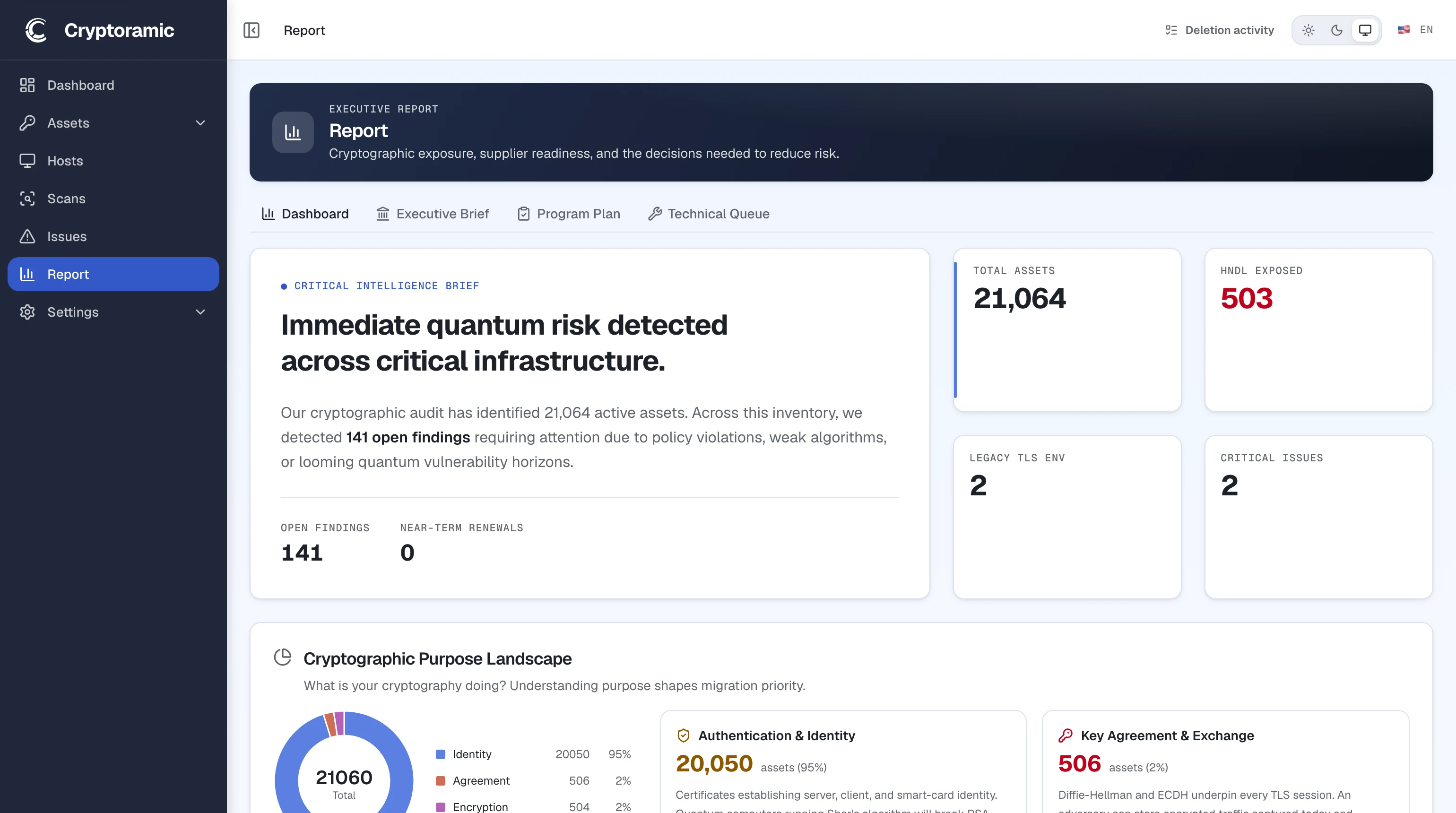
Assessment outputs for every audience.
Use the same inventory to explain exposure to a sponsor, investigate a finding with an engineer and prepare a supplier conversation.
Establish the baseline
Discovered assets keep their source and relationships. Your customer can follow a finding back to the file, image or service that produced it.
Explain the priority
Bring policy findings and supplier readiness into the discussion. Add the customer’s service criticality and operating constraints to decide what matters first.
Present the work ahead
Dashboard, Executive Brief, Program Plan and Technical Queue give leadership and technical teams views built for their decisions.
Supplier evidence and maturity.
Cryptoramic matches available PQCMM reports to identified products and versions. See declared maturity beside observed exposure, then ask for the evidence your customer is missing.
Model developed by PQC Maturity Model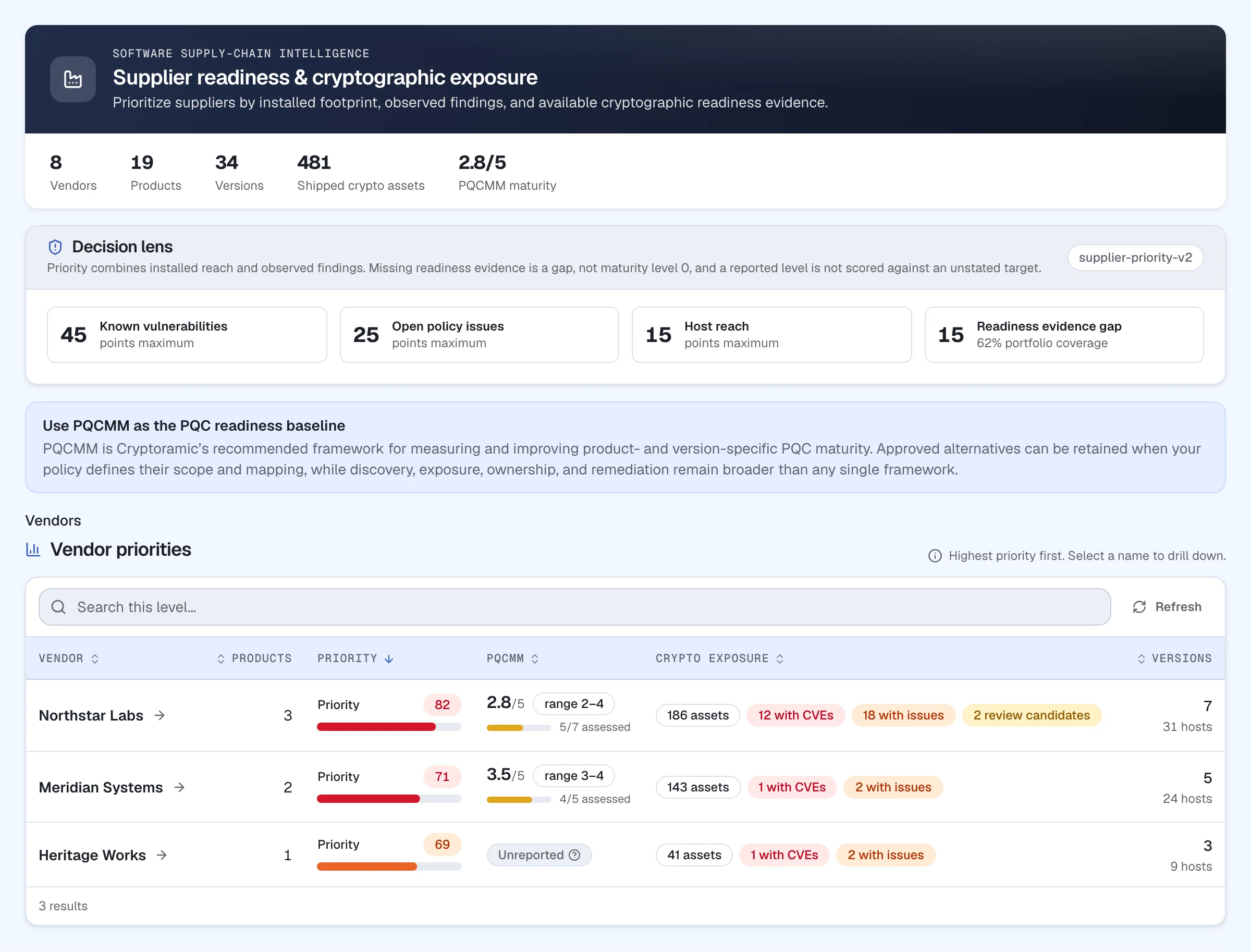
The assessment workflow.
Give every finding a source and every next step an owner.

Choose a question
Agree the customer decision, an accountable owner and the sources you can inspect. Start with an application, image or network segment.
Collect and interpret
Cryptoramic discovers and evaluates the evidence. You bring business context, test applicability and distinguish local changes from supplier dependencies.
Agree and review actions
Use the reports to discuss the next changes. Collect again after changes and review the results with the customer; migration testing remains part of the engagement.
Collection options.
Use supported remote discovery, a portable agent that runs once, or offline collection. The customer controls the application and inventory. Agree delivery responsibilities, licensing and support before the engagement.
- RemoteSupported remote sources
- Run onceLocal files, images and configuration
- OfflineCollect without a server connection

One inventory for analysis and reporting
Bring us a customer question.
We can show the application on a relevant example and discuss how it fits your services.